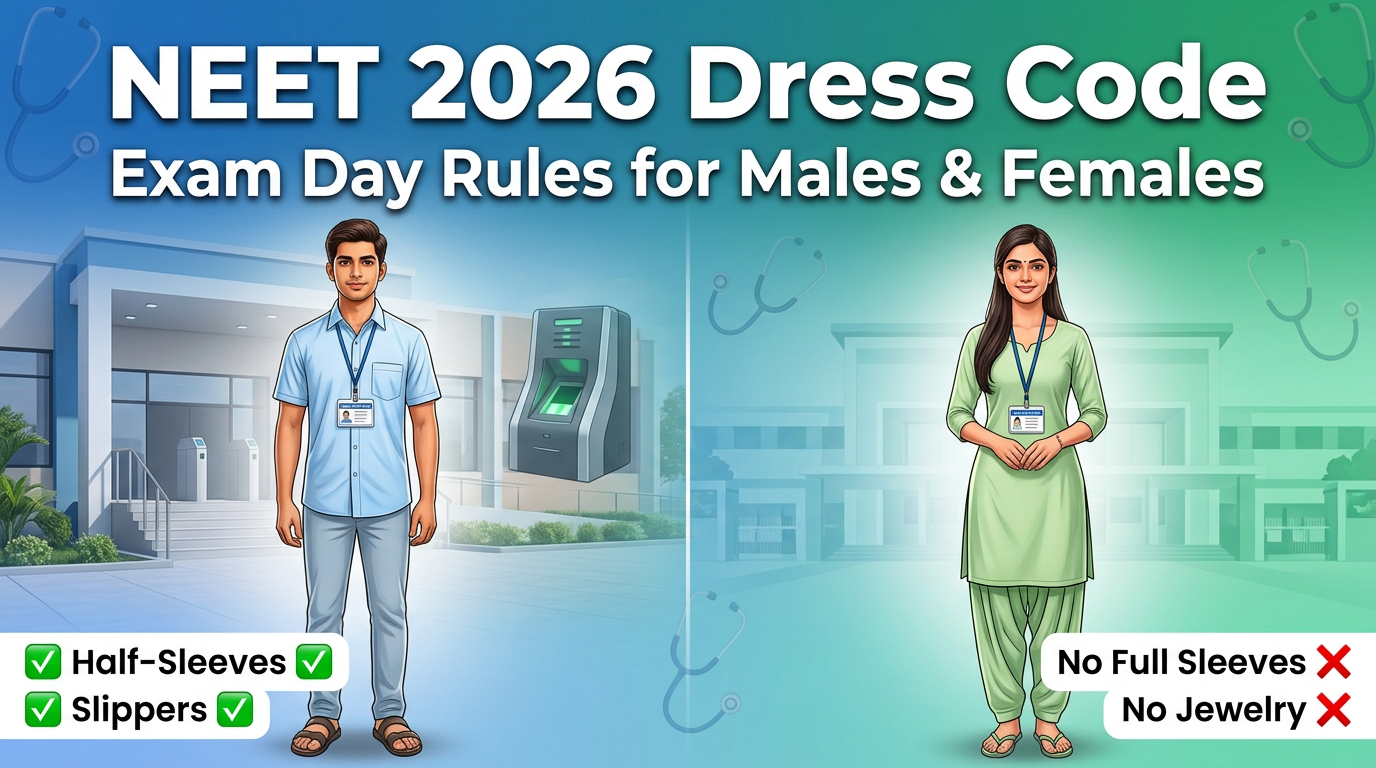
The NEET 2026 exam, organized by the National Testing Agency (NTA), enforces a strict dress code to ensure smooth security checks and maintain exam integrity. Candidates must wear simple, light-colored clothes with half-sleeves to avoid delays during frisking. Following these rules helps prevent disqualification at the exam center.
Why the Dress Code Matters
NTA introduced these guidelines to minimize malpractice risks and speed up entry processes, especially with advanced biometric and metal detector checks. Non-compliant attire like heavy clothing or accessories can trigger thorough inspections, causing stress on exam day. Arriving in approved outfits ensures you focus solely on the test.
Dress Code for Male Candidates
Males should choose comfortable, basic clothing for hassle-free checks.
- Half-sleeve shirts, T-shirts, or kurtas in light colors.
- Trousers, pajamas, or jeans without heavy embroidery, zippers, or multiple pockets.
- Slippers, sandals, or open-toed footwear (no shoes, boots, socks, or closed heels).
Prohibited: Full-sleeves, caps, belts, wallets, ties, or any metallic items.
Dress Code for Female Candidates
Females have similar simplicity requirements, prioritizing ease of frisking.
- Half-sleeve kurtas, tops, T-shirts, or tunics with salwar, churidar, leggings, or pants.
- Simple suits or Western wear without frills, prints, dupattas, scarves, or jewelry.
- Flat slippers or low-heeled sandals (no heels, closed shoes, or socks).
Prohibited: Sarees, lehengas, jeans with rivets, chain, nose rings, or bangles.
Religious headgear or attire declared during registration may be allowed but requires extra time for checks—report 2 hours early.
Exam Day Tips for Compliance
Report to the center 60-90 minutes before the shift starts (typically 1:30 PM for afternoon slots). Carry your admit card, photo ID, and passport-sized photo; leave bags and valuables outside. Practice wearing your chosen outfit beforehand to confirm comfort during the 3-hour exam.
Common Mistakes to Avoid
Many candidates face issues from overlooked details like buttoned shirts or embroidered kurtas, leading to entry denial. Opt for cotton fabrics over silk or synthetics, which may trigger detectors. Check NTA’s official bulletin for updates, as rules evolve slightly each year.