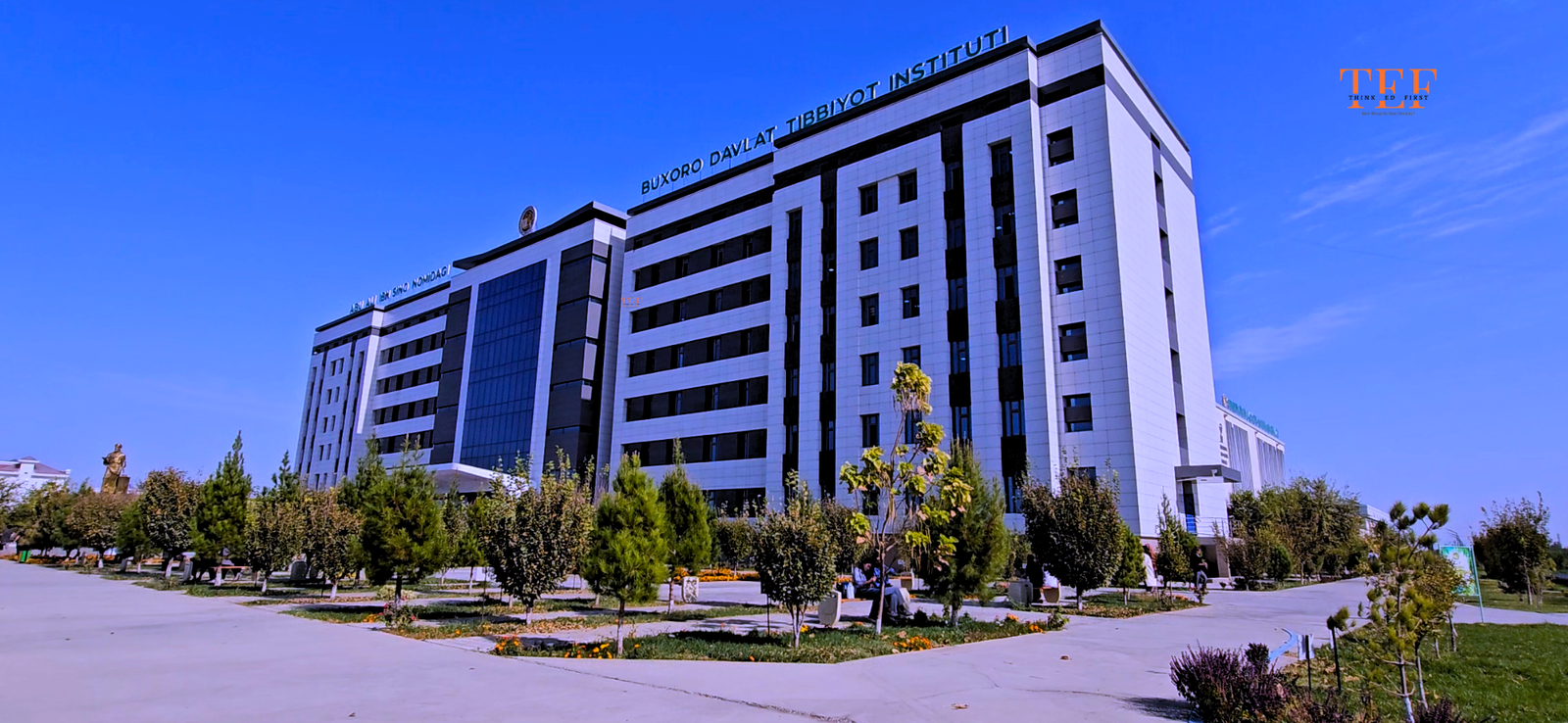
A Rising Star in Medical Education
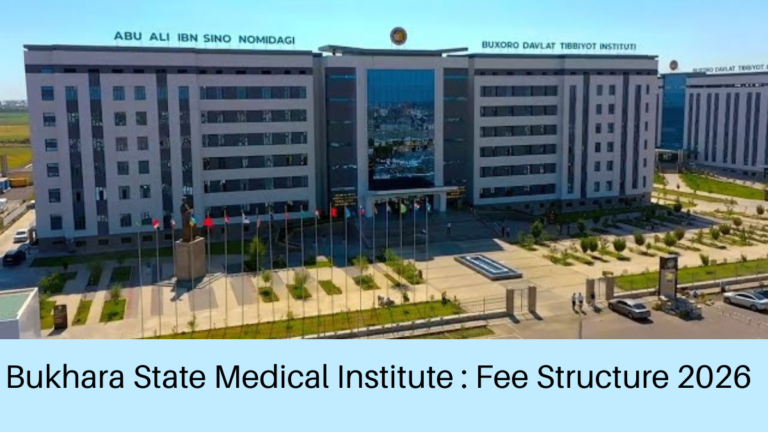
In October 1990, Bukhara State Medical Institute (MBBS) opened its doors to students eager to pursue excellence in medical education. Just months later, in March 1991, the institution was honored with a name that carries centuries of prestige—named after Abu Ali ibn Sino (Avicenna), the legendary Persian physician and philosopher whose contributions to medicine and science shaped the field for generations. This naming was more than ceremonial; it reflected BSMI’s commitment to upholding the highest standards of medical scholarship and innovation.
More than three decades later, BSMI has evolved from a newly established institution into one of Uzbekistan’s most respected medical education centers and an increasingly popular choice for international students seeking world-class medical training. For Indian medical aspirants and students from across the globe, BSMI represents an accessible pathway to a globally recognized medical degree with opportunities for practice in multiple countries.
📚The Evolution of Excellence: A Timeline of Growth
BSMI’s expansion reflects a strategic commitment to meeting the diverse and evolving needs of global healthcare systems. The institute didn’t remain static; instead, it grew deliberately, adding faculties and departments in response to healthcare market demands:
1991: Faculty of Medicine established, marking the beginning of BSMI’s core academic operations
1992: Faculty of Dentistry inaugurated, expanding into specialized dental education
1999: Department of Highly Qualified Nurses launched, addressing the critical global shortage of skilled nursing professionals
2001: Department of Medical Pedagogy introduced, recognizing the need for educators who can train the next generation of healthcare professionals
2016: Department of Pediatrics formed, reflecting the importance of specialized pediatric care
2018: Two new departments added—Medical Prevention and Medical Biology—demonstrating BSMI’s responsiveness to emerging healthcare specialties
This progressive expansion over three decades isn’t random growth; it’s strategic diversification that positions BSMI graduates for success across multiple healthcare sectors globally.
Academic Structure: The Numbers Behind Excellence
Today’s BSMI is a sprawling institution with substantial academic infrastructure:
| Metric | Details |
|---|---|
| Faculties | 4 major faculties |
| Departments | 53 specialized departments |
| Student Population | Over 9,180 students and residents |
| Academic Staff | 648 dedicated faculty members |
| Professors (Doctor of Science) | 97 |
| PhD Holders & Associate Professors | 253 |
| Senior Teachers & Assistants | 100 |
These figures reveal an institution with the scale and depth to provide quality education across multiple disciplines. The ratio of faculty to students—particularly the number of professors and PhD holders—suggests substantial access to experienced mentorship and research opportunities, crucial factors for students considering their medical education abroad.
Faculty Composition & Research Excellence
The presence of 97 professors with Doctor of Science degrees and 253 PhD holders indicates that BSMI isn’t merely focused on undergraduate education. This is an institution invested in research, postgraduate training, and advancing medical knowledge. For Indian students, this means access to faculty engaged in cutting-edge research and equipped to prepare them not just for board exams but for careers in academic medicine and research if desired.
Programs at BSMI: From Bachelor’s to Specialty Training
Bachelor’s Degree Programs (9 Disciplines)
BSMI offers bachelor’s degrees across a carefully curated selection of medical disciplines:
- General Medicine (6 years)—The flagship program, comparable to MBBS in India
- Pediatrics (6 years)—Specialized training in child healthcare
- Dentistry (5 years)—Comprehensive dental education
- Medical Pedagogy (6 years)—For those interested in medical education and training
- Medical Prevention Work (5 years)—Public health and preventive medicine focus
- Medical Biology (4 years)—Research-oriented medical science education
- Higher Nursing (3 years)—Advanced nursing education
- Traditional Medicine (4 years)—Indigenous and alternative medicine practices
- Pharmacy (5 years)—Pharmaceutical sciences and drug development
Postgraduate Offerings: Master’s and Residency
Beyond bachelor’s education, BSMI provides:
- Master’s Degrees: Available in 30 specialties, allowing graduates to pursue advanced study and leadership roles in healthcare
- Clinical Residency: 36+ specialty programs for hands-on postgraduate training
- Joint Double Degree Programs: 20 programs combining bachelor’s, master’s, and residency levels with international partner institutions
The International MBBS Program
For international students, including those from India, BSMI offers a dedicated MBBS (International Program) consisting of:
- 5 years of academic study
- 1 year of clinical internship
- Instruction in English, ensuring accessibility for non-Russian speakers
- Global recognition, with graduates eligible to take licensing exams in multiple countries
This 5+1 structure aligns with international standards and addresses a critical concern for Indian students: ensuring their qualification is recognized globally.
Multilingual Education: Breaking Language Barriers
One of BSMI’s most significant advantages is its commitment to multilingual instruction. Courses are offered in:
- Uzbek (the national language)
- Russian (widely spoken in Central Asia)
- English (the international language of medicine)
- Turkish (reflecting regional connectivity)
For Indian medical aspirants worried about language barriers, the availability of English-medium instruction is transformative. This means international students can focus entirely on mastering medical content rather than struggling with unfamiliar languages.
Why BSMI Attracts International Students
1. Affordable Education Without Compromise on Quality
Compared to medical schools in the United States, Europe, or even private institutions in India, BSMI offers tuition fees that are substantially lower while maintaining rigorous academic standards. This makes high-quality medical education accessible to Indian middle-class families for whom pursuing medicine abroad might otherwise be unaffordable.
2. Global Recognition and Licensing
BSMI graduates are equipped to take licensing exams and practice in:
- Uzbekistan and Central Asian countries
- Russia and former Soviet republics
- Middle Eastern countries
- Increasingly, countries that recognize qualifications from WHO-affiliated medical schools
This flexibility is crucial for Indian students who may wish to return to India (via FMGE or similar exams) or explore opportunities in other countries.
3. Diverse Student Body and Cross-Cultural Learning
With students from India, the Middle East, Central Asia, and beyond, BSMI offers an inherently diverse learning environment. International students benefit from:
- Exposure to different healthcare systems and practices
- Networking opportunities with peers from across the globe
- Preparation for working in multicultural healthcare settings (increasingly important in modern medicine)
4. Evidence-Based, Hands-On Curriculum
BSMI’s curriculum aligns with modern education standards set by Uzbekistan’s “Law on Education” and emphasizes:
- Clinical practice alongside theoretical learning
- Real-world application of medical knowledge
- Preparation for licensing exams and clinical practice (not just theoretical knowledge)
5. Strategic Location in Central Asia
Bukhara itself is a historic city with rich cultural heritage, offering international students not just education but also cultural immersion. The region’s relative stability and well-developed higher education infrastructure make it conducive for sustained academic focus.
Double-Degree Programs: A Competitive Advantage
The availability of 20 joint double-degree programs at bachelor’s, master’s, and residency levels is particularly noteworthy. These programs allow students to:
- Earn qualifications recognized by two institutions simultaneously
- Gain exposure to different medical education systems
- Enhance their CV with dual credentials attractive to employers worldwide
- Network with students and faculty from partner institutions
For Indian medical graduates considering further specialization, these programs provide a structured pathway to advanced qualifications without the uncertainty of applying independently to foreign institutions.
The Faculty Advantage: Learning from Experts
With 648 academic staff members, BSMI ensures that students have meaningful access to experienced educators. The composition—including 97 professors and 253 PhD holders—suggests several advantages:
- Research Opportunities: Many faculty members are actively engaged in research, meaning undergraduate and postgraduate students can participate in meaningful projects and potentially co-author publications.
- Clinical Mentorship: Senior clinicians with years of experience directly supervise students’ clinical rotations, ensuring quality training in patient care.
- Mentorship and Guidance: With a reasonable faculty-to-student ratio, students aren’t lost in large lecture halls. Personalized mentorship is feasible.
- Contemporary Medical Knowledge: Faculty with active research programs stay updated on the latest medical advances and can incorporate current evidence into their teaching.
How BSMI Compares to Other Central Asian Medical Schools
While several Central Asian institutions offer medical education, BSMI stands out due to:
- Longer establishment period (since 1990) compared to many newer institutions
- Greater faculty depth (97 professors is substantial for the region)
- More diverse program offerings (9 bachelor’s disciplines vs. typical 3-4 at other institutions)
- Extensive international partnerships (20 joint degree programs)
- Strong focus on international students (with multilingual instruction and dedicated English programs)
Admission and Career Prospects
For Indian Students
Indian medical aspirants considering BSMI should be aware:
Eligibility: Typically, completion of 12+2 with biology and chemistry is required. Some programs may require entrance examinations or NEET scores for screening, though BSMI’s international program may have different requirements.
Admission Process: International students usually apply directly to BSMI. The process typically includes submitting educational credentials, proof of English language proficiency, and sometimes an interview.
Career Pathways After Graduation:
- Return to India: FMGE (Foreign Medical Graduate Examination) to practice in India; increasingly, Indian states are recognizing Central Asian medical graduates
- Practice Abroad: Licensing exams in Uzbekistan, Russia, Middle Eastern countries, or other nations recognizing BSMI qualifications
- Further Specialization: Master’s or residency programs at BSMI or partner institutions
- Research or Academia: Transition to academic medicine or medical research with advanced degrees
Global Opportunities: Why BSMI Graduates Succeed
The institute’s design and curriculum structure create multiple pathways to success:
1. Multilingual Competency
Graduating with fluency in English, Russian, and potentially other languages makes graduates competitive in international healthcare markets.
2. Cultural Intelligence
Training in an ethnically and nationally diverse environment prepares graduates to work effectively in multicultural healthcare systems, a growing priority globally.
3. Evidence-Based Practice
BSMI’s emphasis on modern curricula and hands-on learning ensures graduates understand contemporary medical practice, not outdated approaches.
4. Networking Capital
Alumni from 30+ years of operation span the globe, creating informal networks for job placement, collaboration, and career mentorship.
The Avicenna Legacy: Excellence Through History
The naming of BSMI after Avicenna (Ibn Sino) is symbolically significant. Avicenna was the author of the Canon of Medicine, which remained the primary medical textbook in Europe and the Islamic world for centuries. He represented the pinnacle of medical knowledge, ethics, and innovation in his era.
By adopting his name, BSMI commits itself to this legacy: pursuing medical excellence, advancing knowledge through research, and maintaining high ethical standards. For students, this isn’t just institutional branding—it’s an invitation to join a tradition of medical greatness spanning over a thousand years.
Conclusion: Is BSMI Right for You?
Bukhara State Medical Institute represents a compelling option for Indian medical aspirants and international students seeking:
- Affordable, high-quality medical education in a globally recognized institution
- English-medium instruction without language barriers
- Diverse learning environments with peers from across the globe
- Flexible postgraduate pathways through master’s and residency programs
- Global recognition with pathways to practice in multiple countries
- Clinical rigor combined with research opportunities
For Indian students, where medical education options abroad are limited by cost and competition, BSMI offers a proven alternative with three decades of institutional credibility and a growing international reputation.
The institute’s expansion, faculty strength, diverse student body, and strategic location make it not just a medical school, but a gateway to a truly global medical career. Whether your aspirations lie in clinical practice, research, public health, or specialized medicine, BSMI provides the foundation and opportunities to achieve them.
Next Steps
If BSMI interests you, the next steps are:
- Research specific program requirements for your chosen discipline (general medicine, pediatrics, dentistry, etc.)
- Verify eligibility based on your 12+2 qualifications and any entrance exam requirements
- Connect with current students or alumni to understand the lived experience
- Prepare application materials, including academic transcripts and proof of English proficiency
- Plan your timeline considering visa processing and academic calendars
The journey to becoming a physician is demanding but rewarding. Bukhara State Medical Institute has equipped thousands of graduates for this journey. Your medical future could start here.