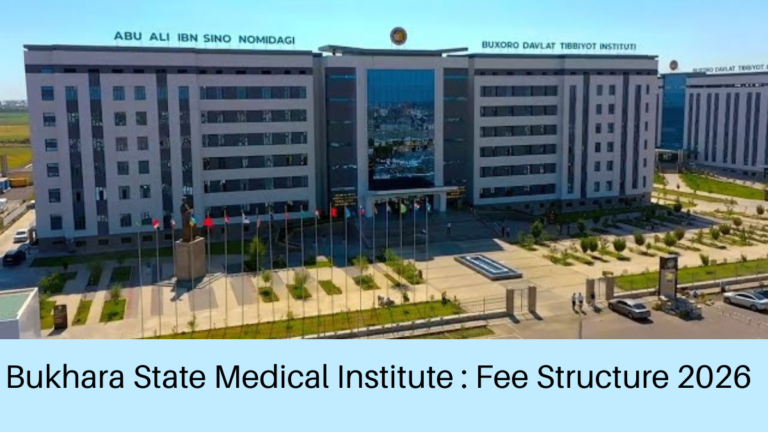
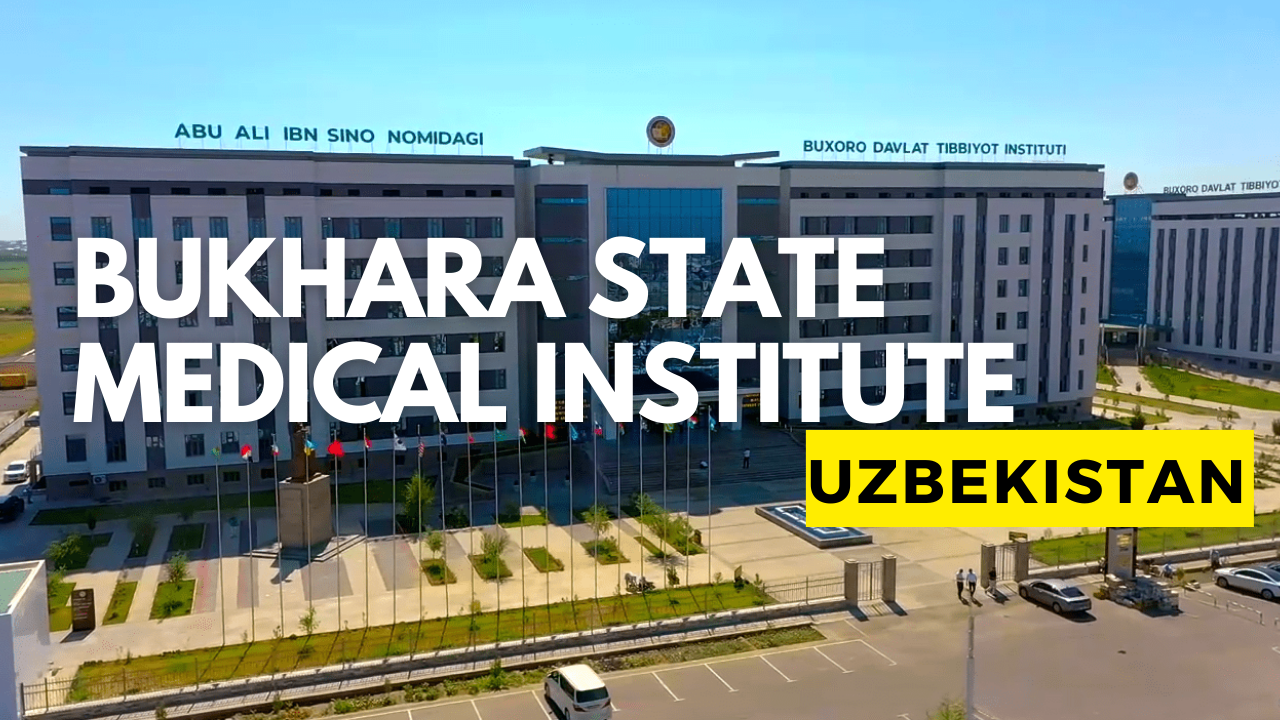
Bukhara State Medical Institute (BSMI), Located in Bukhara, Uzbekistan.
Why This Medical College Matters
Imagine a place where medicine has been studied for over three decades, where students from around the world come to learn, and where modern facilities meet rich history. That place is the Bukhara State Medical Institute—a remarkable institution in the heart of Uzbekistan.
If you’re thinking about studying medicine, either in India or abroad, understanding the history and growth of respected medical colleges is super important. It helps you know that the college has real experience, quality education, and a proven track record. In this guide, we’ll explore the journey of Bukhara State Medical Institute, how it started, how it grew, and why it’s becoming a top choice for students worldwide, including those from India. has focused on advancing medical education and research, contributing significantly to the healthcare sector in Uzbekistan and beyond.
The Beginning—How It All Started
What Year Was Bukhara State Medical Institute Founded?
The story of Bukhara State Medical Institute begins in October 1990. This was a historic time in Central Asia, and the institute was established with a clear goal: to train skilled doctors who could serve the healthcare needs of the region.
Think of it this way: just like how your school started with a vision and a small group of teachers, this medical college started with the dream of creating excellent doctors. The founding resolution came from the USSR Council of Ministers on August 24, 1990 (Official Document Number 850). Even though the institute was officially founded in October 1990, it took a few months for everything to be set up and running smoothly.
The Name Behind the Institute: Abu Ali ibn Sino (Avicenna)
Here’s something really cool—in March 1991, just a few months after opening, the institute was renamed “Abu Ali ibn Sino.” You might know this great scholar by another name: Avicenna.
But who was Abu Ali ibn Sino, and why is he so important?
A Legendary Physician from Central Asia
Abu Ali ibn Sino was born around 980 AD near Bukhara in what is now Uzbekistan. He was not just a doctor—he was a genius who contributed to medicine, mathematics, astronomy, and philosophy. He lived about 1,000 years ago, but his work is still respected today!

Abu Ali ibn Sino (Avicenna) – the great physician and scholar the institute is named after
His Greatest Achievement: The Canon of Medicine
Abu Ali ibn Sino wrote the most important medical book of his time called “The Canon of Medicine” (Al-Qanun fi al-Tibb). Imagine writing a medical textbook so good that doctors around the world use it for 500+ years! This book contained everything doctors knew about treating diseases, medicines, and how the human body works.
In the Muslim world, Abu Ali ibn Sino was known as the “Prince of Physicians.” He served as a personal doctor to kings and rulers. His teachings were so valuable that European doctors studied his work during the Middle Ages.
Why Name the Institute After Him?
By naming the institute “Abu Ali ibn Sino Bukhara State Medical Institute,” the founders wanted to honor the great medical heritage of Central Asia. Under the Samanid Empire, Bukhara rivaled Baghdad for the cultural capital of the Muslim world. This choice connects today’s medical students to 1,000 years of medical wisdom and inspires future doctors to achieve excellence, just like Abu Ali ibn Sino did.
Step-by-Step Growth—The Building Blocks of Success
The Bukhara State Medical Institute didn’t become a big, important college overnight. It grew slowly but steadily, adding new programs and departments over the years. Let’s follow this growth journey:
Timeline of Major Milestones
1990 – Institute Founded (October)
The journey begins with the foundational resolution from the USSR Council of Ministers.
1991 – Faculty of Medicine Established
This is the core program! The Faculty of Medicine started, which means students could now formally study to become doctors. This was the heart of the institute.
1992 – Faculty of Dentistry Added
The institute expanded to include dental education. Now students could become both doctors and dentists.
1999 – Department of Highly Qualified Nurses Created
Recognizing that good doctors need excellent nurses to work with them, the institute started training nursing professionals.
2001 – Department of Medical Pedagogy Launched
This department teaches people how to teach medicine and train future doctors. It’s like a “teacher training” program for medical educators.
2016 – Department of Pediatrics Established
Pediatrics is the branch of medicine that focuses on children’s health. This department shows that the institute values specialized training in different medical fields.
2018 – Medical Prevention and Medical Biology Programs Added
The institute started new programs in disease prevention and medical biology, showing it stays updated with modern medicine.
2023 – Modern Campus Inaugurated
After years of construction, the institute opened its brand-new, state-of-the-art campus with modern buildings, laboratories, and facilities.
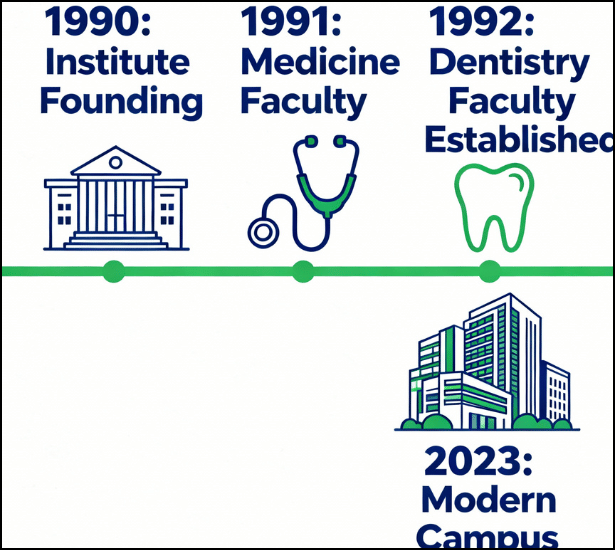
Timeline of Bukhara State Medical Institute growth and milestones
Quick Facts About the Growth
By 2023, the Bukhara State Medical Institute had grown to include:
- 4 Major Faculties (Medicine, Dentistry, Medical Education, Nursing, and others)
- 53+ Departments offering specialized training
- Over 9,180 Students from all over the world
- More than 648 Faculty Members, including professors and experienced teachers with 97 holding Doctor of Science degrees and 253 PhD holders
- International Recognition from the World Health Organization (WHO)
This growth shows that the institute has continuously improved and expanded to meet the needs of students and the healthcare system.
Understanding Today’s Bukhara State Medical Institute
Now that you know the history, let’s understand what the institute looks like today.
What Programs Does the Institute Offer?
The institute offers many different medical programs. Think of it like a medical supermarket—it has programs for different interests and career goals:
Undergraduate Programs (Bachelor’s Degrees)
| Program Name | Duration | What You’ll Study |
|---|---|---|
| General Medicine (MBBS) | 5-6 years | Become a doctor who can treat all kinds of patients |
| Pediatrics | 6 years | Specialize in treating children and babies |
| Dentistry | 5 years | Become a dental professional |
| Medical Prevention | 5 years | Learn how to stop diseases before they happen |
| Medical Biology | 4 years | Study the biology behind diseases and treatments |
| Higher Nursing | 3 years | Train to become a professional nurse |
| Traditional Medicine | 4 years | Learn healing methods from ancient wisdom |
| Pharmacy | 5 years | Become an expert in medicines |
Graduate Programs (Master’s Degrees and Beyond)
The institute offers 30+ Master’s degree programs in specialties like cardiology, neurology, surgery, pediatric surgery, and many more. There are also 40+ Clinical Residency Programs where doctors can specialize further after graduation.
The Modern Campus: A Learning Paradise
In 2023, the institute moved to a beautiful new campus. Here’s what makes it special:
- Bright, modern lecture halls with smart boards and projectors
- Spacious libraries with thousands of medical books and digital resources
- High-tech research centers for cutting-edge medical studies
Practical Training Facilities
- Advanced anatomy, biology, and chemistry laboratories
- Simulation center equipped with modern medical equipment (11 billion sums invested)
- University hospital with real patient care for clinical practice
- Specialized clinics in cardiology, neurosurgery, orthopedics, and more
- Comfortable dormitories with modern rooms for 1,200+ students
- Sports complex with gymnasiums and athletic facilities
- Student canteen that serves 500 meals at a time
- Recreational areas and gardens for relaxation
- A state-of-the-art simulation training center with cutting-edge medical equipment
- Modern solar panels for sustainable energy
- Clinics for advanced surgeries including cardiac, neuro, and transplant operations
- A total of 12 high-rise buildings built on 4.3 hectares
This new campus shows that the institute is serious about providing world-class education to its students.
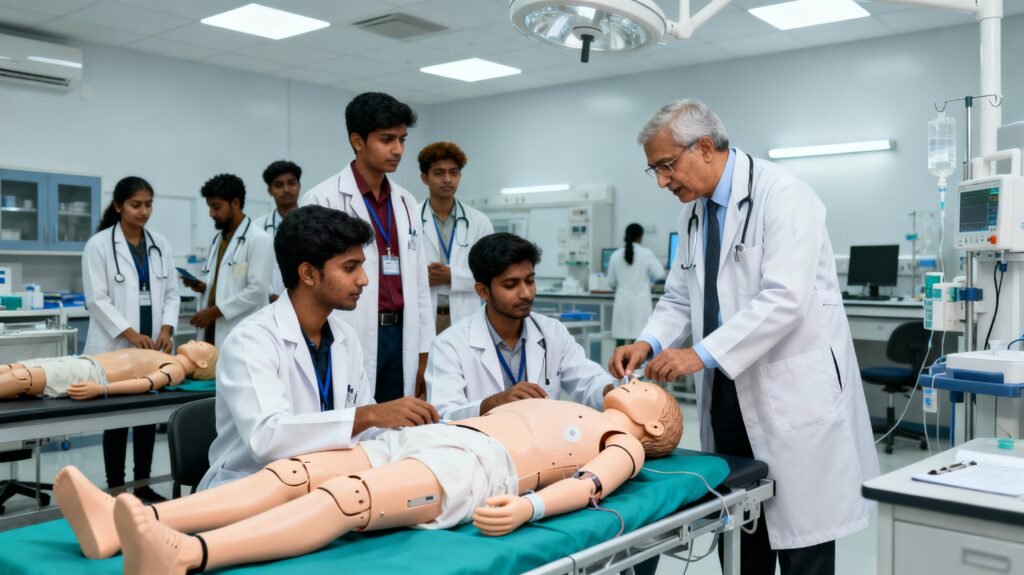
Medical students at BSMI engaged in practical training and clinical education
Languages of Instruction
Here’s something really important for international students: The institute teaches in four languages: Uzbek, Russian, English, and Turkish.
This is wonderful news for Indian students! You can study the entire MBBS program in English without needing to know other languages first. Of course, you’ll learn basic Uzbek or Russian during the course to help you during hospital practice with patients.
Bukhara State Medical Institute vs. Other Medical Colleges
If you’re considering where to study medicine, you might want to compare BSMI with other options. Here’s how it stacks up:
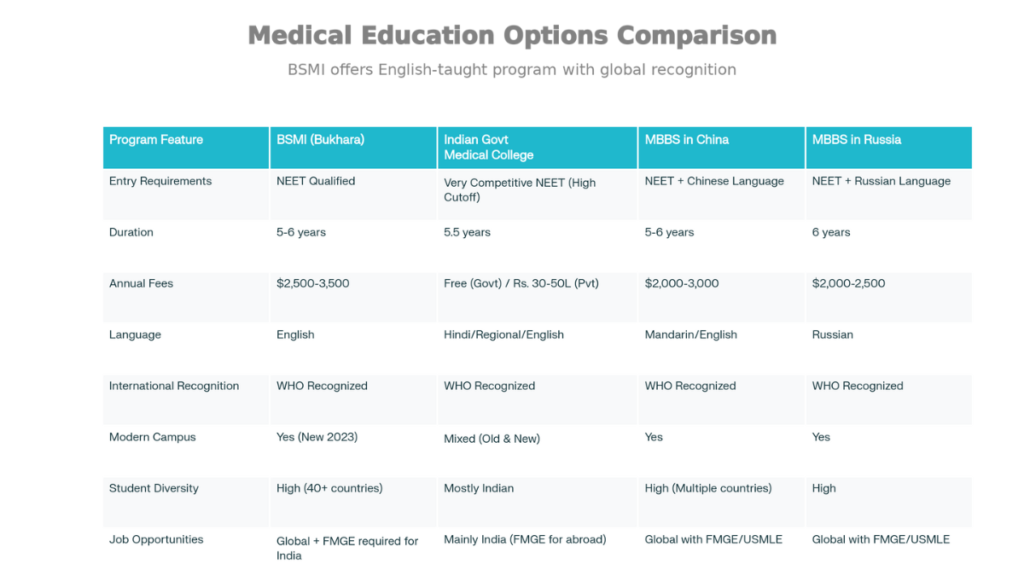
BSMI vs Other Medical Education Options: Key Features Comparison
Key Takeaway: BSMI offers a modern, English-taught, internationally recognized medical degree at a reasonable cost with a diverse student community.
Why Choose Bukhara State Medical Institute? Practical Advantages
For Indian Students Specifically
If you’re an Indian student thinking about MBBS abroad, here’s why BSMI might be perfect for you:
1. English-Medium Education
You don’t need to learn another language before applying. All classes are taught in English. You’ll learn basic Uzbek during your course, but it’s not a requirement to start.
2. WHO Recognition
Your degree will be recognized by the World Health Organization. This means you can practice medicine in many countries around the world, including coming back to India if you want. (You’ll need to pass the FMGE exam to practice in India, just like any Indian medical student.)
3. Affordable Fees
Compared to private medical colleges in India, studying at BSMI costs much less—roughly $2,500-3,500 per year. This is about the same as other MBBS options abroad.
4. Modern Infrastructure
The new campus from 2023 has all the latest technology for learning and practice. No outdated facilities here!
5. Diverse Student Community
About 10% of the institute’s students are international, coming from India, Pakistan, Kazakhstan, Tajikistan, Afghanistan, Russia, and more. You won’t feel alone—there are other Indian students already studying there!
6. Holistic Education
The institute focuses on practical skills. You’ll spend time in real hospitals starting from year 3, not just reading textbooks.
7. Clinical Experience
The university hospital and clinics give you hands-on experience in all major medical specialties.
Real Numbers About Success
- Over 6,000+ students are studying at BSMI
- More than 400 faculty members teach and mentor students
- FMGE passing rate of about 47.83% (143 out of 299 students in 2024)
- International partnerships with universities in USA, Turkey, India, South Korea, and others
Step-by-Step Guide: How to Apply to BSMI
Thinking about applying? Here’s what you need to do, step by step:
Step 1: Check Eligibility Requirements
- You must have passed NEET exam (National Eligibility cum Entrance Test) with at least qualifying marks
- You must have completed Class 12 with Physics, Chemistry, and Biology
- You should be at least 17 years old at the time of admission
- Nationality doesn’t matter—international students are welcome
Step 2: Prepare Your Documents
Gather these important documents:
- Your NEET scorecard
- Class 10 and Class 12 certificates
- Passport (valid for at least 2 years)
- Medical fitness certificate
- Police clearance certificate
- Your birth certificate
- Photograph (recent, 4×6 cm)
Step 3: Contact Admission Partner
Reach out to an authorized admission counselor like Think ED First.
Step 4: Submit Your Application
Fill out the application form with all your personal and academic details. Most institutes accept applications through their official website or through authorized partners.
Step 5: Receive Your Admission Offer
Once your application is approved, you’ll receive an official admission letter.
Step 6: Complete Immigration Procedures
- Get your student visa for Uzbekistan
- This typically takes 2-4 weeks
- Your admission partner can help guide you through this
Step 7: Arrange Travel and Accommodation
- Book your flight to Bukhara
- The institute provides on-campus accommodation in their dormitories
- Your admission partner can help with all arrangements
Step 8: Join the Institute
- Arrive before the academic session starts
- Complete orientation programs
- Begin your medical journey!
Pro Tip: Having an admission counselor like Think ED First can make this entire process much smoother. They know all the requirements, timelines, and can answer questions specific to your situation.
Day-to-Day Life at Bukhara State Medical Institute
What’s a Day Like for a Medical Student?
Let’s paint a picture of what your typical day might look like:
Morning (7:00 AM – 10:00 AM)
- Wake up in the dormitory
- Have breakfast in the student canteen
- Attend lectures in the main academic building
- Topics might include anatomy, biochemistry, physiology, or pathology
Late Morning (10:00 AM – 1:00 PM)
- Practical sessions in laboratories
- Work with real specimens, slides, and equipment
- Practice under supervision of experienced doctors
- Learn by doing, not just reading
Afternoon (1:00 PM – 2:30 PM)
- Lunch break in the student canteen
- Socialize with classmates from different countries
- Rest or study in the library
Late Afternoon (2:30 PM – 5:00 PM)
- More practical sessions or clinical rounds in the hospital (from year 3 onwards)
- Learning from real patients with real doctors
- Understanding how medicine is actually practiced
Evening (5:00 PM onwards)
- Sports or recreation in the sports complex
- Study group sessions
- Attend cultural or social events
- Relax in dormitory
Special Features of Student Life
Diverse Community
You’ll study with students from India, Russia, Kazakhstan, Tajikistan, Turkey, and many other countries. This teaches you not just medicine, but also global perspectives.
Practical Hands-On Training
Unlike pure lecture-based learning, BSMI focuses on doing. You’ll practice on simulation dummies, then move to real patients under supervision.
Regular Exams and Assessments
The institute has continuous evaluation. You won’t just have end-semester exams—you’ll have quizzes, assignments, and practical exams throughout the year.
Research Opportunities
Students can participate in medical research projects, helping them understand the science behind medicine.
Cultural Activities
The institute organizes sports events, cultural celebrations, and social gatherings to build a balanced student life.
International Recognition and Accreditation
Why International Recognition Matters
Imagine earning a degree from a college, but nobody outside recognizes it. Frustrating, right? That’s why international recognition is super important for medical degrees.
BSMI’s Recognition
World Health Organization (WHO) Recognition
Bukhara State Medical Institute is recognized by the World Health Organization. This means your degree meets international medical standards. WHO is like the “world referee” for health—if they recognize BSMI, it’s a big deal.
Avicenna Directory Listed
The institute is listed in the Avicenna Directory, which recognizes medical schools across the Islamic world. It’s a mark of quality and standards.
Various International Medical Councils
The degree is recognized by multiple international medical councils, allowing graduates to practice medicine in many countries, pursue further specialization abroad, and apply for medical licensing in various nations.
Graduation and Beyond
After completing your degree at BSMI, you have several options:
Option 1: Practice in Uzbekistan
Many graduates work in Uzbek hospitals, clinics, and healthcare centers.
Option 2: Return to India
If you want to practice in India, you’ll need to pass the FMGE exam (Foreign Medical Graduate Examination), which is the standard test for Indian medical graduates from abroad.
Option 3: Work Internationally
With WHO recognition, you can seek employment in many countries. Each country has its own licensing process, but your degree from BSMI gives you a strong foundation.
Option 4: Further Study
You can pursue Master’s degrees, PhD, or specialization in any medical field—either at BSMI or in other countries.
Practical Tips and Action Plan for Students
For Students Planning to Apply
Tip 1: Score Well in NEET
Your NEET score is crucial. The better your score, the better your chances of admission. If you haven’t taken NEET yet, start preparing seriously.
Tip 2: Learn About BSMI Early
Don’t wait until last minute. Visit the official website, watch videos of the campus, and understand what the institute offers.
Tip 3: Get Guidance from Experts
A good admission counselor can save you time and help you avoid mistakes. They know exactly what the institute wants.
Tip 4: Prepare Documents in Advance
Don’t scramble at the last moment. Start collecting certificates, getting medical check-ups, and passport ready early.
Tip 5: Understand the Full Cost
Calculate total expenses including tuition, accommodation, food, and living costs. Make a budget and plan finances accordingly.
Tip 6: Learn About Student Life
Connect with current students through social media. Ask them about their experience—the real, honest feedback.
Tip 7: Be Ready for Cultural Adjustment
You’ll be in a new country with a different culture. This is exciting but takes adjustment. Be open-minded and curious.
30-Day Action Plan for Serious Applicants
Week 1: Research Phase
- Day 1-2: Visit BSMI’s official website thoroughly
- Day 3-4: Watch campus videos and student testimonials
- Day 5-7: Research cost, eligibility, and admission timeline
Week 2: Preparation Phase
- Day 8-10: Gather documents you already have
- Day 11-14: Apply for missing documents (certificates, etc.)
Week 3: Planning Phase
- Day 15-17: Calculate total costs and plan finances
- Day 18-21: Contact admission counselors for guidance
Week 4: Application Phase
- Day 22-25: Prepare and submit your application
- Day 26-30: Follow up on your application status
Important Questions to Ask Before Deciding
- About the Program: Is the entire course in English? What’s the curriculum like?
- About Hostel: What’s the accommodation like? Cost? Facilities?
- About Healthcare: What’s the quality of medical facilities? Modern or outdated?
- About Faculty: How many experienced professors teach? Student-teacher ratio?
- About Exams: How often are exams? What’s the exam pattern?
- About Placements: What do graduates do after finishing? Job opportunities?
- About Support: Is there support for Indian students? Any Indian alumni network?
- About Internship: When and where do students do clinical practice?
The Big Picture—Why BSMI’s History Matters Today
Learning from 30+ Years
Bukhara State Medical Institute has been operating for over 30 years. That’s three decades of experience, trial and error, learning, and improvement. When you choose BSMI, you’re not taking a chance on a new, untested college. You’re joining an institution that has:
- Trained thousands of doctors who are now working in hospitals across the world
- Built state-of-the-art facilities showing commitment to quality education
- Earned international recognition that your degree has real value
- Grown continuously showing it listens to students and improves
- Maintained standards for over 30 years—that’s consistent excellence
The Connection to Abu Ali ibn Sino
By naming itself after Abu Ali ibn Sino, BSMI carries forward 1,000 years of medical wisdom. Every medical student at BSMI is part of this legacy—learning from the traditions of one of history’s greatest physicians while using the latest modern technology.
This combination of ancient wisdom and modern science is what makes medical education at BSMI special.
About Bukhara State Medical Institute
✓ Founded in 1990, making it over 30 years old
✓ Named after Abu Ali ibn Sino, a legendary Central Asian physician from 1,000 years ago
✓ Grew systematically, adding new faculties and departments from 1991 to 2023
✓ Modern campus in 2023, with state-of-the-art facilities
✓ Offers multiple programs, from General Medicine to specialized postgraduate studies
✓ Teaches in English, making it accessible for international students
✓ WHO recognized, ensuring your degree has international value
✓ Affordable option, compared to private colleges in India
✓ Diverse student body, with students from 40+ countries
Call to Action: Start Your Medical Journey Today
Dreaming of becoming a doctor?
Confused about where to study—India or abroad?
Want guidance on applications, fees, and timelines?
You don’t have to figure this out alone!
Why Choose Think ED First?
Think ED First specializes in helping students like you navigate the world of medical education. Whether you’re interested in MBBS in India or studying abroad, we’re here to guide you through every step:
✓ Expert Counseling – Our team knows medical colleges inside and out
✓ Personalized Guidance – We understand YOUR goals and dreams
✓ Complete Assistance – From applications to visas to admission, we handle it all
✓ Honest Advice – No pressure, just honest recommendations based on your profile
✓ Success Stories – Hundreds of students we’ve guided are now doctors!
We help you answer these key questions:
- Is Bukhara State Medical Institute right for you?
- How to score well in NEET and get admission
- Cost comparison—India vs. Abroad
- Which college matches your goals and budget
- Step-by-step application guidance
- Visa and travel assistance
- Life after admission—settling in and thriving
If you or your child is planning for admissions in India or to study abroad, Think ED First is here to guide you every step of the way. Reach out to us to make your academic journey smoother and smarter!
FAQs: Common Questions About BSMI
Q: Is BSMI degree valid in India?
A: Yes! Your BSMI degree is WHO recognized. To practice medicine in India, you need to pass the FMGE exam, which is required for all Indian medical graduates from abroad.
Q: Can Indian students get admission easily?
A: NEET is mandatory. With a good NEET score, your chances are strong. An admission counselor can guide your application.
Q: What’s the medium of instruction?
A: The entire MBBS course is taught in English. No language barrier!
Q: Is accommodation provided?
A: Yes, the institute has modern dormitories. Students can live on campus.
Q: What about food and living costs?
A: Bukhara is an affordable city. Living costs are much lower than major Indian cities.
Q: Can I visit the campus before admission?
A: You can contact the institute about campus visits. Many students and admission counselors help prospective students see the college.
Q: What about scholarships?
A: Some scholarships are available. Speak with admission counselors about your eligibility.
Q: How often are exams?
A: The institute has regular continuous evaluation with exams throughout the year, plus major semester exams.
Q: Can I change my specialization after joining?
A: First you’ll do General Medicine, then you can specialize based on your performance and interest.
Q: What’s the success rate of passing FMGE?
A: BSMI’s FMGE passing rate was about 47.83% in 2024. With proper preparation, many students pass successfully.
Conclusion: Your Medical Career Starts Here
The history of Bukhara State Medical Institute is a story of growth, excellence, and dedication to medical education. From its humble beginning in 1990 to becoming a modern, internationally recognized institution in 2023, BSMI shows that consistency and continuous improvement create excellence.
If you’re passionate about becoming a doctor, about helping others, and about getting quality medical education at an affordable cost, Bukhara State Medical Institute might be your perfect match.
The legacy of Abu Ali ibn Sino continues through every student who studies at BSMI. You could be next.
Don’t just dream about medical education—make it happen! Reach out to Think ED First today and let’s turn your medical dreams into reality.