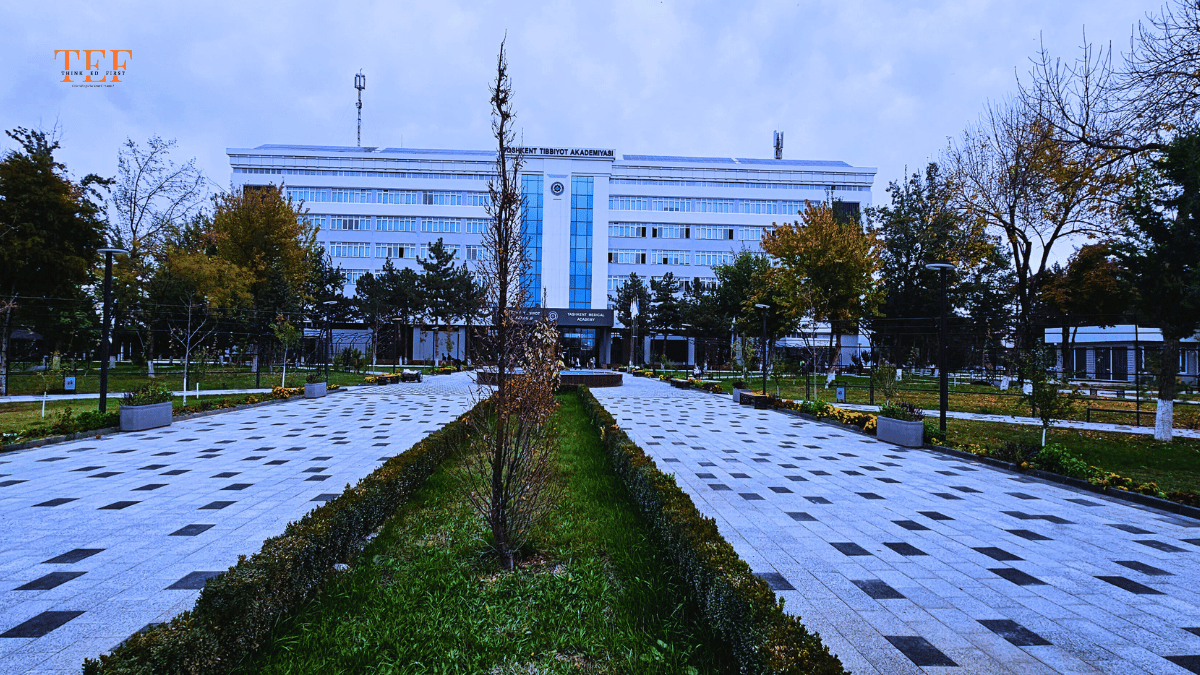
Tashkent Medical Academy has been renamed to Tashkent State Medical University (TSMU).
This change occurred in April 2025 through a Presidential Decree. The renaming was part of a major institutional merger where three medical institutions were combined:
What This Means for Students
The new Tashkent State Medical University began operating in the 2025/2026 academic year. All current and new students will receive diplomas issued by Tashkent State Medical University, not the old Tashkent Medical Academy.
Founding Date Clarification
The original text states the academy was “founded in 2005,” which is partially correct but incomplete. While Tashkent Medical Academy was formally established in 2005, the institution’s roots trace back much further. The medical education at this location began in 1919 as the Faculty of Medicine at Turkestan State University. In 2005, the President of Uzbekistan merged the First and Second Tashkent State Medical Institutes to create the modern Tashkent Medical Academy.
MBBS Program Duration
The original information is accurate. The MBBS program at Tashkent Medical Academy is indeed 6 years total: 5 years of academic study plus 1 year of mandatory internship.
Tuition Fees
The actual total MBBS fees for the complete 6-year course are approximately INR 19 Lacs (or USD 21,000). The annual breakdown is:
- First year: Approximately USD 3,500 (INR 3.11 Lacs approx.)
- Years 2–6: Approximately USD 21,000 (INR 19 Lacs approx.)
Lowest Fees Claim
The statement that TMA offers “the lowest MBBS fees in Uzbekistan for Indian students” . Among Uzbek medical universities accepting Indian students, Tashkent State Medical University maintains competitive fee structures.
Introduction to Tashkent Medical Academy
Tashkent State Medical University (TSMU) is a prestigious government medical institution in Uzbekistan’s capital. Recognized by the National Medical Commission (NMC) and World Health Organization (WHO), it is a leading choice for international medical education, particularly for Indian students. This overview examines the academy’s historical background, institutional structure, and its significance in global medical education.
Historical Background and Overview
Tashkent Medical Academy has roots extending back over a century. Originally established in 1919 as the Faculty of Medicine at Turkestan State University, it evolved into the Tashkent Medical Institute in 1931. Following the separation of medical education into two distinct institutes in 1990 (the First and Second Tashkent State Medical Institutes), the current academy was formed in 2005 through a presidential decree merging these two institutions.
The academy’s structure reflects its comprehensive scope: it comprises six faculties and 52 departments, supported by a multidisciplinary clinic. The institution serves over 7,800 students across undergraduate and postgraduate programs, with more than 1000 Indian students currently enrolled. The faculty includes approximately 800 experienced educators and clinicians dedicated to medical training.
Academic Mission and Recognition
The academy’s mission centers on delivering world-class medical education grounded in research and clinical excellence. As a government institution functioning under the Ministry of Health and Ministry of Science & Higher Education, TSMU maintains rigorous academic standards aligned with international best practices.
The academy’s credentials include recognition by the NMC (National Medical Commission of India), WHO, WDOMS (World Directory of Medical Schools), FAIMER, and UNESCO. These accreditations confirm that degrees from TMA are globally recognized and qualify graduates to pursue licensing examinations in multiple countries, including FMGE/NEXT (India), USMLE (USA), and PLAB (UK).
MBBS Program Structure and Duration
The MBBS program at Tashkent State Medical University is a 6-year course comprising 5 years of academic study and 1 year of mandatory clinical internship. The program covers pre-clinical, para-clinical, and clinical subjects through classroom instruction, laboratory work, and clinical rotations at affiliated teaching hospitals. Instruction is conducted entirely in English, making it accessible to international students without requiring IELTS or TOEFL certification.
Student Capacity and International Enrollment
The academy maintains moderate class sizes to ensure quality clinical exposure and personalized instruction. With over 6,000 international students studying at the institution and growing enrollment from India, Bangladesh, Nepal, and the Gulf region, TSMU has established itself as a regional hub for medical education. The institution provides dedicated support services including Indian mess facilities and student housing to facilitate the transition for international learners.
Academic Programs Offered
Tashkent Medical Academy has many academic programs for students. The classes are in English, which is great for international students. We offer undergraduate, graduate, and continuing education to help students reach their medical education goals in Tashkent.
Our programs give students a full education for a career in medicine. We focus on both practical training and theory. TMA reviews show our programs and faculty are top-notch.
Undergraduate Programs
We have undergraduate programs in many medical fields, including MBBS (General Medicine). The MBBS program is 5 years of academic learning plus 1 year of mandatory clinical internship, totaling 6 years. It’s recognized by the National Medical Commission (NMC) and the World Health Organization (WHO).
Graduate Programs
Our graduate programs allow students to specialize in medicine. We offer postgraduate (Master’s) programs in over 30 specializations, including medicine, dentistry, pharmacy, surgery, cardiology, obstetrics and gynecology, and many others.
Continuing Education Options
Medical professionals can update their skills with our continuing education. We have workshops, seminars, and online courses on medical topics.
Fee Structure Table
| Program | Duration | Tuition Fee |
|---|---|---|
| MBBS (General Medicine) | 6 years (5 years academic + 1 year internship) | Approximately $3,500 USD per year |
| Graduate (Master’s) Programs | 2-3 years | Approximately $4,000 USD per year (varies by specialization) |
Admission Requirements and Process for Tashkent State Medical University (TSMU)
Studying medicine in Uzbekistan at Tashkent State Medical University is a top choice among international students. The institution is recognized for its reputation, academic excellence, and internationally recognized degree. To begin your application, you must meet specific eligibility criteria and follow a structured admission process.
Eligibility Criteria
The following requirements must be met to qualify for admission:
Academic Requirements:
Students must have completed 10+2 (high school) with Physics, Chemistry, and Biology as core subjects. The minimum requirement is 50% aggregate marks in Physics, Chemistry, and Biology for general category students. Reserved category students (SC/ST/OBC) require 40% marks in the same subjects.
NEET Qualification:
For Indian students, qualification in the NEET (National Eligibility cum Entrance Test) exam is mandatory. NEET scores from 2023, 2024, or 2025 are acceptable.
Age Requirement:
Applicants must be minimum 17 years of age by December 31 of the admission year. While some sources mention an upper age limit of around 25 years, there is no strict upper age limit mentioned in official university guidelines.
Language Proficiency:
English proficiency is preferred but not mandatory for NEET-qualified Indian students, as the medium of instruction is 100% English.
Application Procedure
The admission process follows these steps:
Step 1: Document Submission
Submit scans of the following documents:
- 12th Grade Marksheet/Certificate
- 10th Grade Marksheet (may be required for some applications)
- NEET Scorecard (for Indian students)
- Valid passport (minimum 18 months validity)
- Recent passport-size photograph
- National Photo ID Card or Birth Certificate
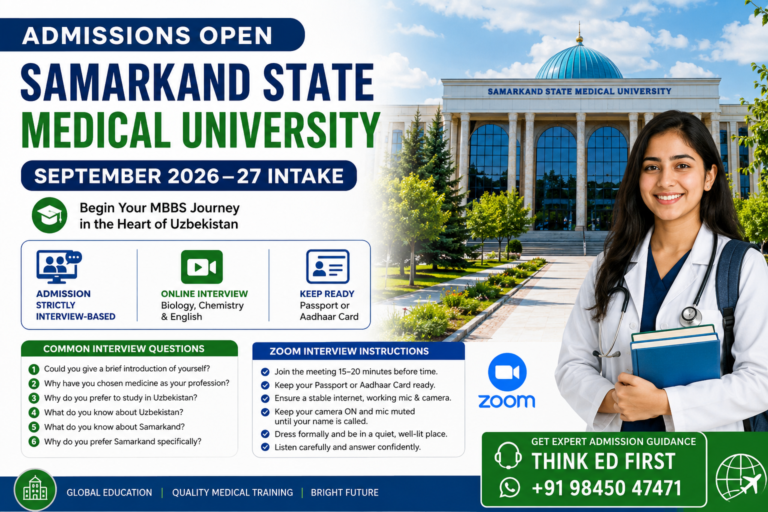
Step 2: Online Interview
Eligible candidates will be invited to attend an online interview conducted via ZOOM by official university professors and members of the International Faculty Dean’s Office. Students must:
- Download ZOOM and ensure a stable internet connection
- Have a peaceful, noiseless environment during the interview
- Keep their original Photo ID (Passport or National Photo ID) ready to display
Step 3: Provisional Admission Letter
Candidates who successfully clear the interview will receive a Provisional Admission Letter within 2 working days with a verifiable QR Code. Important Note: This letter is not a guarantee of admission but only a recommendation, subject to fulfilling all requirements, including payment of tuition fees and submission of medical certificates.
Step 4: Payment of Advance Fee
Students must pay the required tuition fee within the specified deadline.
Step 5: Submission of Medical Certificates
Required medical documents must be submitted.
Step 6-9: Visa Processing and Travel
- Obtain a visa invitation (TELEX) from the university
- Apply for a student visa at the Uzbekistan embassy
- Upon visa approval, travel to Tashkent
- Complete final registration at the university
Document Checklist
Tuition Fees and Financial Aid at Tashkent State Medical University
Tuition Fee
- 1st Year: USD 3,500 (approximately INR 3,11,500)
- Years 2-6: USD 3,500 per year (approximately INR 2,90,500 each)
- Total 6-Year Tuition: USD 21,000 (approximately INR 18.69 Lacs)
Overview of Complete Costs
| Cost Component | Amount |
|---|---|
| Tuition Fees (1st year) | USD 3,500 |
| Tuition Fees (2nd-6th years, per year) | USD 3,500 |
| Hostel/Accommodation (per year) | USD 600 |
| Medical Insurance (per year) | USD 150-200 |
| Living Expenses (monthly) | USD 120-200 |
| One-time Charges (visa, registration, documentation) | USD 1,500 |
Total Estimated Cost for Full 6-Year MBBS: USD 35,000 (approximately INR 31.15 Lacs)
Campus Facilities and Resources
Tashkent State Medical University (also known as Tashkent Medical Academy) offers comprehensive modern facilities designed to support student learning and development. Here is accurate information about the institution’s resources:
Academic Facilities
The campus features advanced laboratories and simulation centers equipped with cutting-edge technology for clinical training. The university provides smart classrooms with digital learning tools to support contemporary medical education methods. Additionally, simulation labs are available for students to practice surgeries and diagnostic procedures, ensuring hands-on experience essential for medical professionals.
Information Resource Center and Library
The Information Resource Center represents one of the most significant academic assets at the institution, with roots dating back to 1920, making it the oldest collection of medical books and manuscripts on medicine in Uzbekistan. Currently serving over 8,000 readers, the center houses a comprehensive collection including 681,594 copies of books across various medical and allied disciplines. The library contains more than 20,000 copies of educational literature in English, along with materials in Uzbek and Russian languages. The center also maintains 15,597 electronic versions of main educational literature and offers access to international databases including Medline, EBSCOhost, Thomson Reuters (Web of Science – Core Collection), and Oxford University Press.
The reading rooms accommodate 400 seats with extended working hours up to 22:00, and a virtual library provides online access to electronic resources with 10 internet-connected computers available for student use.
Student Housing
- Room 3 or 4 Beds
- kitchens for student use
- Indian Food
- Wi-Fi coverage throughout the hostels
- football field, volleyball courts, and basketball courts.
- Security measures include turnstiles at entrance points, CCTV surveillance, 24/7 security personnel
Faculty and Staff Qualifications
Tashkent State Medical University maintains a highly qualified faculty and staff committed to delivering excellence in medical education. The institution’s human resources reflect a strong commitment to academic rigor and professional development.
Faculty Composition and Expertise
The academy’s faculty of 803 members includes distinguished scholars and practitioners across all academic levels. This structure comprises 2 academicians, 97 professors, 183 docents, and 357 assistant lecturers. Additionally, the faculty includes 176 doctors of sciences and 396 Ph.D. holders, representing a scientific potential of 70.2%. This composition demonstrates a robust commitment to both teaching and research excellence, with faculty members actively engaged in advancing medical knowledge through various research initiatives.
Educational Delivery and Student Support
The academy maintains a student-to-faculty ratio of 4:1, which facilitates personalized instruction and mentorship. With 4,662 students enrolled across four faculties—general medicine, medico-pedagogical, medico-prophylactic, and higher nursing—the academy distributes academic resources effectively. Additionally, 735 postgraduate students are pursuing specialized training across 46 different directions, and 205 physicians are undergoing clinical residency training across 20 specialized fields.
International Accreditation and Global Recognition
The academy’s commitment to maintaining world-class standards is evidenced by its international accreditation. In 2024, 19 educational programs successfully passed international accreditation through the Independent Agency for Accreditation and Rating (IAAR). This accreditation confirms compliance with World Federation for Medical Education (WFME) standards and includes recognition from the World Health Organization (WHO) and the National Medical Commission (NMC). These credentials ensure that faculty expertise meets global benchmarks for medical education and practice.
Research and Scholarly Activities
Faculty members are actively engaged in research and scholarly work. Since 2005, the academy has produced 64 doctors of sciences and 388 Ph.D. graduates. The Central Research Laboratory oversees 25 ongoing research projects, including 18 applied research projects, 3 fundamental research initiatives, 2 innovation projects, and 2 youth-focused projects, with 160 staff members contributing to research implementation.
International Student Life at Tashkent State Medical University
Tashkent State Medical University (TSMU) is a prominent destination for international students pursuing medical education. The university offers a vibrant, multicultural environment where students from various countries come together to study, live, and grow.
Academic Environment
The medium of instruction for international students is primarily English, which facilitates a smooth learning process. The curriculum is designed to meet international standards, with a strong emphasis on practical training in affiliated hospitals. Students benefit from experienced faculty and modern facilities.
Campus and Accommodation
- On-Campus Hostels: TSMU provides secure hostel accommodations for international students. Rooms are typically shared, with basic amenities provided.
- Off-Campus Housing: Many students also opt for private apartments or shared flats in nearby areas for more independence.
Student Community and Activities
The university has an active international student community. Various student organizations and clubs organize:
- Cultural Events: Celebrations of national festivals, international food fairs, and cultural nights.
- Academic Societies: Medical clubs, research groups, and seminars.
- Sports and Recreation: Football, basketball, and other sports facilities are available.
Life in Tashkent
Tashkent, the capital of Uzbekistan, is a historic yet modern city. International students can explore:
- Rich cultural heritage sites (e.g., Registan Square, Chorsu Bazaar)
- Affordable public transport
- Diverse culinary experiences
- A generally safe and welcoming environment
Support Services
TSMU offers specific support for international students, including:
- International Office: Assistance with visas, residency, and academic guidance.
- Buddy Programs: Senior students help newcomers adjust.
- Language Support: Uzbek and Russian language courses are often available.
Challenges and Adaptation
Like studying abroad anywhere, students may face initial challenges such as:
- Adapting to a new climate (continental climate with hot summers and cold winters)
- Navigating language barriers outside the university
- Adjusting to local customs and cuisine
However, the supportive university environment and friendly local community help students overcome these hurdles quickly.
Location and Accessibility “Tashkent State Medical University”
Tashkent State Medical University is located in Tashkent, the capital city of Uzbekistan. It sits in the central part of the city, making it relatively easy to reach from major residential and commercial areas.
Accessibility:
- By road: The university is reachable via Tashkent’s city bus network, minibuses (marshrutkas), and taxis; major roads and avenues connect the campus with different districts.
- By metro: Tashkent has a metro system; the nearest metro station(s) are within a short taxi or bus ride from the university (exact station may vary depending on which faculty building you need).
- From the airport: Tashkent International Airport is about 10–15 km from the city center; travel time to the university is typically 20–40 minutes by car or taxi depending on traffic.
- Parking and on-campus access: The university campus provides entry points for students and visitors; parking availability can be limited during peak hours, so public transport is often more convenient.
Tip: For precise directions to a specific faculty or administrative office, check the university’s official website or contact their administration for the exact address and recommended transit routes.
Alumni Success Stories
Tashkent State Medical University alumni have built strong careers across clinical practice, research, and public health, both within Uzbekistan and internationally. Many graduates hold prominent roles as hospital chiefs, leading specialists, and university faculty, contributing to improved healthcare standards and medical education in the region.
Notable trends among alumni success stories:
- Clinical leadership: Graduates often become heads of departments in major hospitals, recognized for expertise in surgery, internal medicine, pediatrics, obstetrics & gynecology, and other specialties.
- Academic and research achievements: Alumni serve as professors and researchers at national and international institutions, publishing in peer-reviewed journals and leading clinical trials and public-health studies.
- Global practice and further training: Numerous alumni pursue postgraduate training and fellowships abroad (Europe, Russia, South Korea, India) and work in international medical centers, enhancing their skills and professional networks.
- Public health and administration: Some alumni move into healthcare administration and government roles, shaping health policy, disease control programs, and community health initiatives.
- Entrepreneurship and innovation: A growing number have launched healthcare startups, diagnostic centers, telemedicine services, and medical education platforms, applying clinical knowledge to solve system gaps.
Examples of typical alumni trajectories:
- Numbered list:
- A graduate becomes a chief surgeon at a regional hospital, introduces minimally invasive techniques, and mentors younger surgeons.
- An alumnus completes a PhD and leads a research lab focusing on infectious diseases, publishing international papers and securing grants.
- A former student obtains specialty training abroad and returns to establish advanced cardiac care services in Tashkent.
- An alumna transitions into the Ministry of Health, helping to design national immunization campaigns.
- A group of graduates founds a private diagnostic chain that expands access to quality lab services.
- Many alumni remain active in the university’s alumni networks, contributing through guest lectures, scholarships for outstanding students, and collaborative research projects.
For specific named success stories and profiles, consult the university’s official alumni webpage, press releases, or social media channels, where they often highlight distinguished graduates and their achievements. The academy’s curriculum is designed to give students a solid education in medicine, setting them up for success in their careers.
Faculty Feedback
The faculty at the Tashkent Medical Academy are seasoned and committed. They offer students guidance and support, helping them reach their academic goals. Students value their expertise and dedication to teaching.
Rankings and Accreditations
| Aspect | Details |
|---|---|
| Primary National Accreditor | Ministry of Higher and Secondary Specialized Education of Uzbekistan |
| Key International Listing | World Health Organization (WHO) – World Directory of Medical Schools |
| Key for US Practice | ECFMG eligible (via WHO listing) |
| National Ranking | Top-tier, often 1st or 2nd in Uzbekistan |
| Faculty General Perception | Highly qualified, experienced, and dedicated; teaching style can be traditional. |
| Strengths | Strong clinical faculty, recognized degrees, established regional reputation. |
In conclusion, Tashkent State Medical University maintains a strong, accredited standing with a reputable faculty. Its rankings reflect its premier status in the region, making it a credible and established choice for medical education.